

January-February 2025 Edition
"The new year stands before us, like a chapter of a book, waiting to be written."
– UNKNOWN AUTHOR

Beyond the Bloom:
Why Intentional Habits Matter More Than Resolutions
In 2025, we’re finding purpose, setting intentions, and finally throwing the idea of New Year’s resolutions out the window.
As the colder months approach and we spend more time inside, it’s hard not to reflect on what the past year has held. A new career, a cross-country move, the loss of a loved one, the birth of a baby, or a college graduation—these are what I like to call “chapter titles.” These big events and milestones become the landmarks of our personal history. They’re the flowers that bloom from seeds we planted long ago.
When I think about my life, I want it to be full of vibrant flowers—a testament to the hard work I’ve put in over the past year. But as the freezing temperatures remind me, flowers don’t bloom year-round. There’s a reason for the stillness of winter, and while we may eagerly count down the days until warmer weather, winter has its purpose too.
This brings me to a question: What is the purpose of winter—both biologically and metaphorically?
According to a quick Google search, the purpose of winter for plants includes:
Energy storage: Plants push nutrients from their leaves to their roots to conserve energy and prepare for spring.
Reduced activity: Plant functions slow down.
Soil improvement: Winter frost breaks up soil, improving its structure and drainage.
Pest control: Cold temperatures kill off pests that would otherwise harm plants.
Seed germination trigger: Certain plants require cold temperatures to trigger seed germination in the spring.
Now, I know you didn’t open this newsletter for a biology lesson, but stay with me.
If the largest trees and tiniest plants require a season of intentional rest and preparation, why wouldn’t we need the same?
If the “chapter titles” of our lives are the big moments, then the sentences that precede and follow them are the ones we write daily. And this is where we often go astray when crafting New Year’s resolutions. We focus too narrowly on the end goal—the flowers—and forget to plan for the daily habits needed to nurture them.
Take, for example, a resolution to lose 15 pounds by going to the gym five times a week.
The goal is great, but without considering the work it takes to get there, it’s rare for that resolution to make it past February. Instead of focusing solely on the outcome, we should ask ourselves:
Is going to the gym five times a week realistic, or would a 30-minute YouTube HIIT workout fit better into my schedule?
How will I stick to my workout plan when I’m tired, sore, or unmotivated?
Are the people around me supportive and active?
How will I adjust my diet to support this shift in energy and activity?
The answers to these questions are the daily sentences that build the chapters of our lives. These countless small decisions, made day after day, shape who we will become.
To truly embrace this philosophy, we need to get intentional, aware, and mindful. It requires us to look in the mirror and take an honest, objective inventory of our habits. We must bring subconscious behaviors into the light of awareness, understanding how they influence our actions and outcomes.
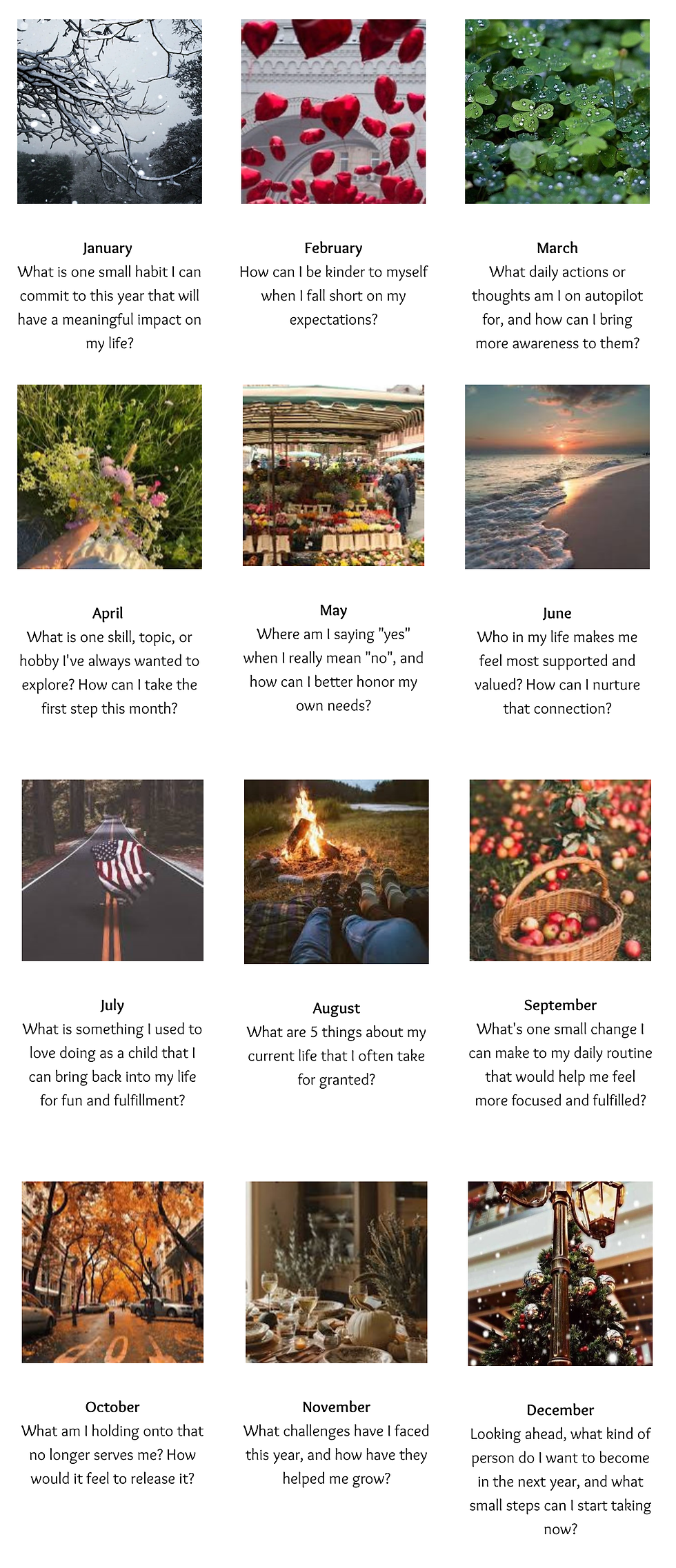
2025 doesn’t have to be another year of false starts and disappointments. Below, I’ve included journal prompts to help you get started on this journey. And don’t forget to share your new insights with your therapist as you explore them!
Your 2025 Journal Calendar

The Heart's Deepest Patterns
Have you ever wondered why you have a "type"? Learning about your attachment style could help shed some light on why your heart leans in a certain direction (even if it hurts).
Secure Attachment
How it Shows Up:
You feel comfortable with intimacy, but also enjoy independence
You can express your needs and emotions without fear of rejection
Conflict doesn't feel like a threat to the relationship
You trust your partner or friends without excessive worry.
Real-Life Example:
A person with secure attachment might say, "I know my partner loves me even when we're apart. If we have a disagreement, I trust we'll work through it together."
Anxious Attachment
How it Shows Up:
You crave closeness but often feel insecure about whether others feel the same.
You overanalyze texts, interactions, or changes in tone.
Conflict feels overwhelming, and you may fear being abandoned.
You need frequent reassurance in relationships.
Real-Life Example:
Jamie texts their partner, but after 30 minutes without a reply, they start spiraling: "Did I say something wrong? Are they mad at me? What if they're losing interest?" Instead of waiting, they send three more messages, anxiously seeking a response.
Avoidant Attachment
How it Shows Up:
You value independence to the point of avoiding emotional closeness.
You shut down or withdraw when conversations get too emotional.
You feel suffocated when others need you too much.
You struggle to express vulnerability, often saying "I'm fine" even when you're not.
Real Life Example:
Chris enjoys dating but keeps things casual. When someone starts getting emotionally close, they pull away or find flaws in the relationship. They might think, "I don’t need anyone," but deep down, they long for connection.
Disorganized Attachment
How it Shows Up:
Relationships feel chaotic—sometimes you crave closeness, and other times you withdraw.
You have a deep fear of abandonment but also struggle to trust.
You may struggle with emotional regulation and feel intense highs and lows in relationships.
You often feel torn between "I need love" and "Love is dangerous."
Real Life Example:
Taylor wants reassurance from their partner but also doesn’t trust it when they get it. If their partner is kind, they think, "They must want something." If their partner takes space, they think, "They’re leaving me." This push-pull dynamic makes relationships exhausting.
If any of these examples hit a little too close to home—maybe you’ve caught yourself avoiding tough conversations with your partner or feeling anxious when they don’t text back right away—you’re not alone. These unconscious patterns shape how we show up in relationships, often without us even realizing it. If you're curious to explore your attachment style and how it influences your connections, we’re here to help.
Call us at 845-540-1002 to schedule a free consultation.
Community Resources


The Rockland County Pride Center is a place where everyone is welcome—no matter your gender, age, sexuality, or background. They’re always doing incredible work to build a community rooted in love, acceptance, and pride in who you are. From their LGBTQ+ Youth Program, which gives young people a safe space to connect, to their BIPOC Potluck, which brings people together to celebrate diversity, they’re constantly hosting events that create connection and support. Whether you're looking for resources, community, or just a place to be yourself, the Pride Center is always there with open arms.


Comments